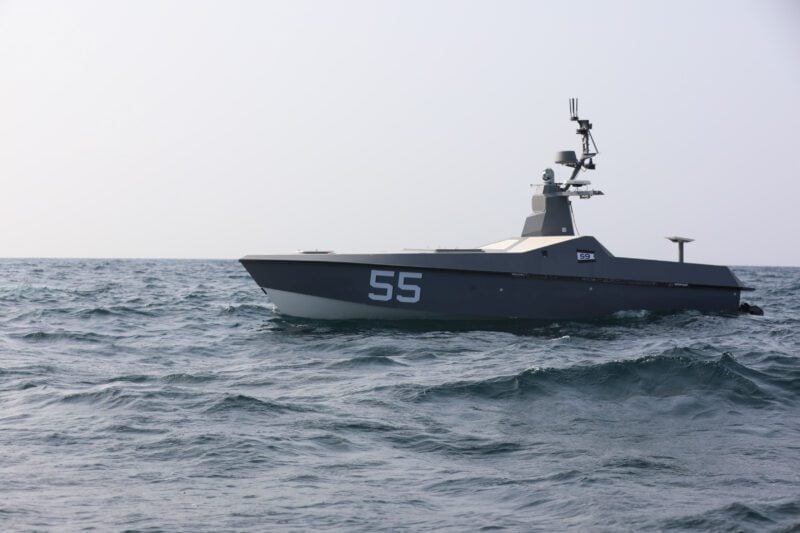
The US Navy should turn its experience with unmanned vessels in the Persian Gulf into a framework for regular fleet operations, according to an opinion article by Chris Servello published by gCaptain. The article highlights rescue, surveillance and mine-countermeasure roles in waters where commercial shipping operates alongside naval forces, arguing that successful trials now need clearer deployment and support arrangements.
Among the developments cited is the deployment of the Leidos-built Seahawk medium unmanned surface vessel with the USS Theodore Roosevelt Carrier Strike Group. Seahawk and its sister vessel, Sea Hunter, have supported years of work on autonomous navigation, collision avoidance, communications and operations alongside crewed ships. Servello argues that the deployment offers an opportunity to establish how commanders can use the technology under operational conditions rather than solely in testing.
The article also describes a rescue near Oman in June, when a 24-foot Saronic Corsair unmanned surface vessel recovered two Army aviators and carried them to a location for helicopter evacuation. According to the account, Acting Secretary of the Navy Hung Cao highlighted the recovery at an Association of the United States Army conference, alongside the use of unmanned underwater systems for mine clearance.
For shipping, the article points to BlackSea Technologies, now part of AEVEX, responding to a requirement for unmanned mine-countermeasure capabilities in the Persian Gulf. Servello describes mines as a threat to traffic through the Strait of Hormuz and argues that unmanned equipment offers ways to address that danger while limiting exposure for sailors and costly ships. BlackSea’s Global Autonomous Reconnaissance Craft is also cited as a means of extending surveillance without assigning a crewed warship to every task.
Servello credits Fifth Fleet and Task Force 59 with developing experience alongside industry and regional partners, but says broader adoption requires decisions on vessel ownership, operator training, maintenance and readiness. He recommends prioritising relatively mature tasks, including surveillance, scouting, screening, electronic warfare and selected logistics work. Within a year, he argues, the Navy should identify missions suitable for routine deployment and establish the organisations and support systems needed to sustain them.